Over the past few months or so I have been asked many times by students and clients about all the different forms of magnesium’s and which type for specific problems/symptoms. So here is my blog focusing on magnesium in its many forms. Also magnesium is one of the most common deficiencies for everyone so hopefully will be helpful information to consider.
Magnesium is one of the most important minerals in the human body
—yet many of us don’t realise just how many different forms of it exist, or how differently each form works. From soothing tight muscles and improving sleep, to supporting heart rhythm, digestion, or even brain health, magnesium plays a key role in hundreds of cellular processes every single day. But with so many options on the shelf—glycinate, citrate, malate, taurate, L-threonate, and more—it’s easy to feel overwhelmed.
Which form of magnesium would you benefit from?
This A–Z guide is designed to make things simpler. Instead of treating magnesium as a “one-size-fits-all” supplement, we’ll look at how each type behaves in the body, what it’s best used for, and who may benefit most from it. Some forms are energising, others calming. Some are ideal for sensitive digestion, while others target muscle cramps, the heart, or cognitive function. By the end of this article, you’ll understand the strengths, limitations, and ideal uses of each major form of magnesium—so you can choose the one that supports your health goals, not just the one that sounds familiar on the label.
Whether you’re looking to boost energy, reduce stress, improve sleep, ease constipation, protect your heart, or support your brain—there’s likely a magnesium form perfectly suited to you. Let’s explore what they all do, and how to find the right one.
Below is a quick overview of the different types of Magnesium.
A
Magnesium Ascorbate – Good absorption, antioxidant and immune support. Contains vitamin C in gentle form.
Magnesium Aspartate – Good absorption, energy and metabolism support, can be overstimulating.
C
Magnesium Carbonate – Low/moderate absorption, antacid, mild supplement, can cause gas/bloating
Magnesium Citrate – High absorption, constipation relief, muscle cramps, overall supplementation. Can cause loose stools if dose too high.
Magnesium Chloride – Good absorption. Cellular magnesium support, supports heart during its resting pause before the next beat, helps with muscle cramps and relaxation in a supplement form. Also used in topical magnesium oils. Mild laxative effect possible.
F
Magnesium Fumarate – Moderate absorption. Energy metabolism although rarely used on its own.
G
Magnesium Gluconate – Good absorption. Well-tolerated general supplement. Can be a mild laxative.
Magnesium Glycinate – Excellent absorption. Sleep, anxiety, muscle tension, gentle on stomach and rarely causes loose stools.
H
Magnesium Hydroxide – Low absorption. Laxative (Milk of Magnesia) antacid. Causes diarrhoea if over used.
L
Magnesium lactate – Good absorption, Gentle general supplement, good for sensitive stomachs. Mild laxative in high doses.
Magnesium L-threonate – Excellent absorption (especially for the brain). Cognitive health, memory and prevention of brain aging. Expensive and limited systemic data.
M
Magnesium Malate – High absorption. Energy production, muscle pain, restless legs and fibromyalgia. Usually well tolerated.
O
Magnesium Orotate – Moderate absorption. Heart and mitochondrial function. Expensive and not widely used.
Magnesium Oxide – Poor absorption. Antacid, constipation (strong laxative). May cause cramping and diarrhoea.
P
Magnesium Phosphate – Moderate absorption. Cellular energy (ATP production). Often found in combination formulas.
Magnesium Pidolate – High absorption. Neuromuscular and mood support. Less commonly used in the USA.
S
Magnesium Sulphate (Epsom salts) – Variable absorption. IV use for deficiency, pre-eclampsia, although mainly used for bath soaks for sore muscles. Oral use causes diarrhoea, used in some detoxes. Medical supervision needed for IV.
T
Magnesium Taurate – Good absorption. Heart rhythm, blood pressure, calming. Gentle, heart-protective effects.
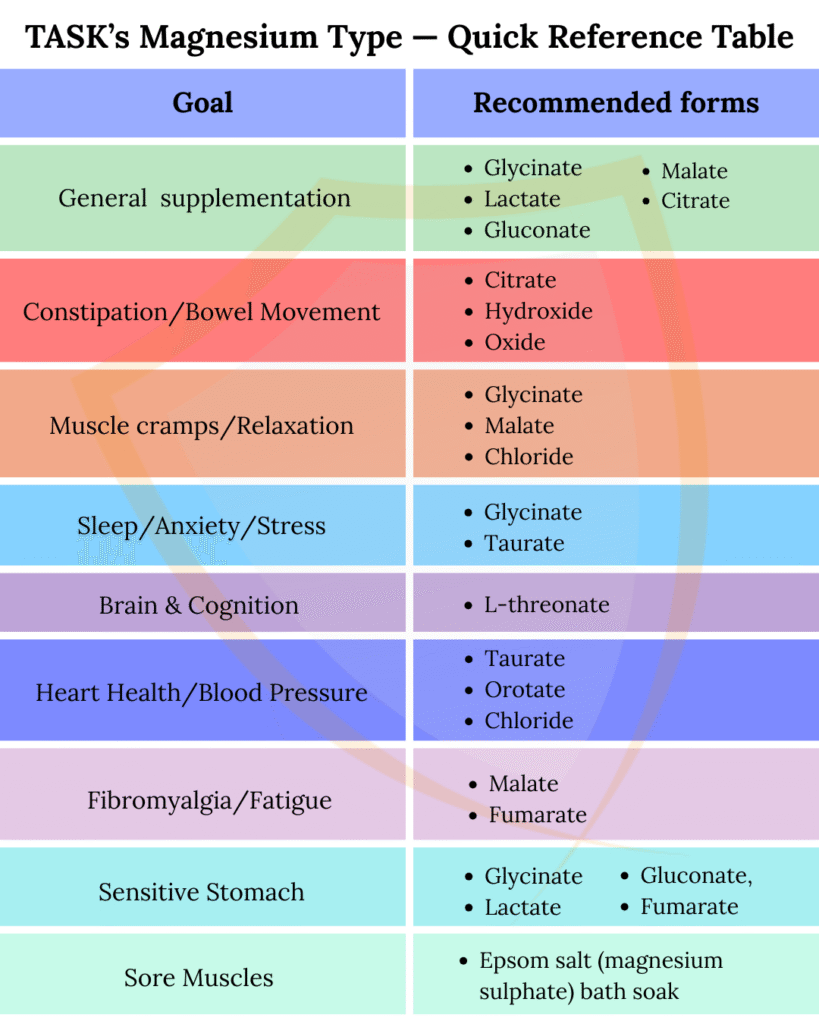
More in depth information about the different forms of Magnesium and their role in supporting health
Magnesium Ascorbate is a high-quality, buffered form of vitamin C that’s gentle on the stomach and highly absorbable. By binding ascorbic acid to magnesium, this supplement offers the powerful benefits of vitamin C with the added advantage of magnesium to support overall wellbeing.
This unique pairing helps maintain daily vitality by supporting immune function, collagen production, antioxidant protection, and psychological balance, while also contributing to electrolyte balance and energy metabolism.
Magnesium Aspartate supports energy metabolism, muscle function, and bone health, and can help replenish magnesium levels depleted by physical activity. It may also aid in reducing fatigue, improving sleep quality, and regulating blood pressure and heart rhythm. Some research suggests potential benefits for anxiety and migraines.
Magnesium Carbonate helps with energy production, muscle and nerve function, normal heart rhythm and protein synthesis. It converts to magnesium chloride (MgCO3) in the stomach, making it absorbable. MgCO3 helps reduce heartburn & indigestion and acts as a mild antacid, helping to neutralise stomach acid, reduce heartburn and ease indigestion or sour stomach. It can also help with muscle tension and restless legs and has as a mild laxative effect because it neutralises stomach acid and draws water into the intestines slightly and can ease constipation to support healthy bowel movements
(usually gentler than magnesium citrate.)
Magnesium Citrate is one of the best-absorbed magnesium supplements, making it effective for increasing low magnesium levels, supporting energy and metabolism and supporting muscle and nerve function. It helps to relieve constipation. Magnesium citrate has a gentle to moderate laxative effect because it draws water into the intestines for occasional constipation promoting regular bowel movements and supporting gut motility. Magnesium citrate can prevent muscle cramps, reduce muscle tension and help with post-exercise recovery. Reduces stress, anxiety, promote relaxation and help with falling asleep.
Magnesium Chloride is known for very high bioavailability, meaning your body absorbs it easily. It’s especially good for restoring low magnesium levels and supporting overall magnesium balance.
Magnesium chloride helps regulate the neuromuscular system and can help reduce muscle cramps, ease tension and support normal nerve function. It supports heart & blood pressure health, regular heart rhythm, balanced blood pressure and healthy circulation. Magnesium chloride may help promote relaxation, improve stress resilience, supports a calmer mood and supports better sleep. Magnesium chloride stimulates digestive enzymes and stomach acid production, which can help with supporting healthy digestion, improving nutrient absorption and helps balance stomach acid levels. (Unlike citrate, it is not mainly used as a laxative, so it generally causes fewer digestive upsets.) Supports normal immune response and the cellular repair processes.
Topical Benefits (Magnesium Oil / Baths)

Magnesium Chloride can be absorbed through the skin, commonly used as:
- Magnesium oil sprays
- Bath flakes
- Massage oils
It helps to:
- Relax muscles
- Soothe tension
- Ease post-exercise soreness
(This avoids possible digestive side effects from oral supplements.)
Magnesium Fumarate is well-absorbed because it is bound to fumaric acid, a natural compound involved in the body’s energy cycle. It supports healthy magnesium levels, muscle and nerve function and heart rhythm. A big advantage of Magnesium Fumarate is that it supports energy production and is part of the Krebs cycle, the body’s main energy-producing pathway. Because of this it can help with reducing fatigue, improving cellular energy and supporting endurance. This makes it popular for people with low energy or chronic fatigue tendencies. Compared to forms like magnesium citrate or oxide, magnesium fumarate is gentle on the stomach so easier on digestion, less likely to cause diarrhoea and suitable for sensitive stomachs. Fumarate (fumaric acid) has mild antioxidant properties that may help to support cellular repair and reduce oxidative stress.
Magnesium Gluconate is well absorbed and gentle on the stomach and supports energy metabolism, muscle function and can help replenish general magnesium levels. It may also aid in reducing fatigue, improving sleep quality, and regulating blood pressure and heart rhythm. It can also offer benefits for anxiety and nighttime restlessness.
Magnesium Glycinate (also called magnesium bisglycinate) is one of the most popular and well-tolerated forms of magnesium. It is magnesium bonded to the amino acid glycine, which gives it excellent absorption and calming effects. Glycine has calming properties, and magnesium supports GABA (a relaxing neurotransmitter). Magnesium glycinate can help to fall asleep faster, stay asleep longer and reduce nighttime restlessness. It’s one of the best forms of magnesium for sleep. It also supports heart and metabolic health including stabilising heart rhythms, healthy blood pressure and also blood sugar regulation. In addition it also helps with PMS symptoms including cramps, mood swings, bloating and sleep issues around menstruation. Glycinate is a good choice for long-term supplementation.
Magnesium Hydroxide is a form of magnesium most commonly used as a laxative and antacid. It is the active ingredient in products like Milk of Magnesia. It is not usually taken for general magnesium supplementation because it is not absorbed as well as other forms (like glycinate or gluconate). Magnesium hydroxide draws water into the intestines, which soften stools, increases bowel movement frequency and helps relieve occasional constipation. it neutralizes stomach acid (Antacid) and can help with heartburn, acid indigestion and a sour stomach. It works by neutralizing excess stomach acid so good for gastritis.
Magnesium Lactate is a gentle, highly absorbable form of magnesium made from magnesium and lactic acid. It is often recommended for people who need long-term magnesium supplementation but have sensitive digestion. Magnesium lactate is well absorbed by the body often better than magnesium oxide or hydroxide. It’s a good option for people with low magnesium levels and those who don’t tolerate other forms. It also supports the nervous system and helps with fatigue, sleep and energy.
Magnesium L-Threonate is a specialised form of magnesium known for its unique ability to cross the blood–brain barrier more effectively than most other forms. Because of this, it is often used for cognitive, mood, and brain-related benefits rather than general magnesium supplementation. This is its most researched benefit. Magnesium L-threonate can help improve short-term memory, support long-term memory formation, enhance learning ability and support overall cognitive health. It raises magnesium levels in the brain more effectively than other forms.
It also helps with Neuroplasticity which is the brain’s ability to change, adapt, and reorganize itself. Studies also show it can increase synaptic density, which supports better nerve communication, improves learning and promotes healthy aging of the brain. This is why it’s often taken for age-related cognitive decline.
Magnesium Malate is a combination of magnesium + malic acid, a natural compound found in fruits (especially apples). It is known for supporting energy production, muscle function, and chronic fatigue relief. It is one of the best forms for people who want an energising magnesium supplement. Malic acid plays a key role in the Krebs cycle—the process your cells use to create energy (ATP). Therefore Magnesium Malate can help with increasing natural energy, reducing fatigue and improved endurance. This form is often recommended for low energy or brain fog. It also helps with muscle function, reduces pain, muscle tension, cramps, restless legs, recovery after exercise and relief from muscle soreness and tender points. Some people with chronic muscle pain and fibromyalgia respond especially well to this form.
Magnesium Orotate is a form of magnesium bound to orotic acid, a compound involved in cellular energy and DNA/RNA synthesis. It is often used for heart health, cellular energy, and athletic performance. It is one of the more specialised and premium forms of magnesium. Magnesium orotate is often used in cardiology because it can help support healthy heart rhythm, improve blood flow and support heart muscle function by reducing the strain on the cardiovascular system. It also boosts Cellular Energy (ATP production) and orotic acid is involved in pyrimidine synthesis, which helps cells create DNA/RNA and cellular energy. Athletes sometimes use it for its performance-enhancing properties.
Magnesium Oxide relieves heartburn and acid indigestion. As it neutralises stomach acid, it can quickly relieve heartburn, sour stomach and acid reflux-related discomfort which is its main use. It also acts as a gentle laxative. MgO absorbs water and forms magnesium hydroxide in the intestines, so helps to soften stools, increases bowel movement frequency and relieves occasional constipation. Magnesium Oxide is the basis of “milk of magnesia.”
Magnesium Phosphate is a highly absorbable magnesium compound commonly found in supplements. It exists in several forms (e.g., magnesium phosphate dibasic or tribasic) and is often used for muscle relaxation, cramp , nerve, and energy support. As Magnesium phosphate helps regulate muscle contraction and relaxation it can help with leg cramps,muscle tightness, post-exercise recovery and PMS-related cramping while being gentle on the stomach. Magnesium phosphate helps maintain proper electrical signaling in nerves helping with reduced nerve irritability, better stress response and a calmer mood. It also can help with fatigue, low energy and weakness.
Magnesium Pidolate can help support nervous system health and combat symptoms associated with magnesium deficiency: migraines, irritability, fatigue, mild sleep disturbances, palpitations, dysmenorrhea, and muscle cramps. It can help regulate sleep by rebalancing serotonin and melatonin levels, as well as modulating stress hormones.
Magnesium Sulphate relieves muscle soreness & cramps. Commonly used in Epsom salt baths, magnesium sulphate helps to relax tight muscle, reduce soreness after exercise, ease leg cramps and reduce inflammation related to muscle strain. Many people use warm baths to boost local magnesium absorption, calm the nervous system, reduce stress and improve sleep. Even if absorption varies, the heat + magnesium combination promotes relaxation.
It can also act as a fast laxative as oral magnesium sulphate draws water into the intestines, helping relieve occasional constipation, producing a bowel movement quickly (usually within hours). It is stronger than magnesium oxide and should be used with caution and only occasionally, not for long-term use.
Magnesium Taurate is a compound made of Magnesium and Taurine (a calming amino acid important for heart function). Together, they create a highly absorbable, gentle, and heart-friendly form of magnesium. The most significant benefits are, maintaining healthy blood pressure, supporting normal heart rhythm, improving arterial relaxation and reducing the risk of arrhythmias. Both magnesium and taurine support healthy electrical activity in the heart.
How can Systematic Kinesiology (SK) help with finding the right magnesium?
Through muscle testing, a Systematic Kinesiology practitioner is able to detect a magnesium deficiency and also test the different types to see which suit and serves the body best.
If you would like to be tested to find out which Magnesium may be right for you with Systematic Kinesiology please go to taskuknetwork.org to find your nearest practitioner.
Please note: People with kidney problems need to speak to a doctor or healthcare provider before taking any magnesium supplement. Also anyone taking mediation needs to check with their doctor/pharmacist before taking supplements.