Trying to conceive can be incredibly frustrating for those that are finding it more difficult than they would like — especially when all their tests look “normal.” As a practitioner you’ve likely heard things like: “I’m ovulating fine. My hormones look okay. My tubes are open. The semen analysis is good. And yet…the person is not conceiving.
At some point, your client might have been told they have unexplained infertility. On paper, that just means the usual tests didn’t find a clear cause. In reality, though, it often comes down to imbalances that don’t show up on routine screens but still matter.
Fertility isn’t just one event — it’s a whole series of conversations happening inside the body between systems that all have to be in sync. And when they’re a little off, it can hold everything up.
What Does ‘Unexplained’ Actually Mean?
When doctors use this term, they usually mean:
- Ovulation is happening
- Fallopian tubes look clear
- Semen analysis looks normal
- Hormone levels fall within standard lab ranges
And still… pregnancy isn’t happening.
The challenge is this: reproduction isn’t just ovulation plus timing. It’s a coordinated dialogue between:
- The hormonal (endocrine) system
- The immune system
- The metabolic system
- The nervous system
When these systems are just slightly misaligned — nothing dramatic, just a bit out of balance — conception can stall.
Subtle Factors That Often Get Overlooked
1. Thyroid health matters — even if a clients bloods are “normal”
Thyroid hormones help support everything from follicle growth to early implantation. Standard ranges are broad, and you can still have a thyroid picture that isn’t optimal for fertility. Looking at symptoms like energy levels, cycle length, and temperature patterns often gives a much richer picture than bloods alone.
2. Low‑grade inflammation can quietly hold things back
Inflammation doesn’t always show up as something dramatic. It can be driven by everyday stressors like blood sugar swings, diet, gut issues, emotional stress, and environmental load. These aren’t “disease” — but they do affect egg quality, endometrial receptivity, hormone signalling and implantation.
3. Food really does make a difference
Nutrition isn’t an optional extra — it’s the foundation. Eating well supports stable blood sugar, hormones, micronutrients, immune balance and more. The ovaries are metabolically sensitive, and the uterus depends on good nutritional support. When the body has what it needs, cycles often improve — sometimes before pregnancy happens.
4. Insulin and reproductive signalling are connected
Even mild blood sugar instability can affect hormones, ovulation quality and progesterone production. This isn’t just about PCOS or body size — insulin signalling plays a role for so many people, even if it doesn’t show up as a diagnosis.
5. The immune system plays a part too
Successful implantation depends on the immune system adapting in a very specific way. Too much persistent activity or inflammatory signalling can interfere with that process, even if everything else looks “normal.”
A Systems View of Fertility
Most people labelled with “unexplained” infertility aren’t dealing with one big imbalance — they’re dealing with many small ones that add up:
- A slightly suboptimal thyroid picture
- Mild blood sugar shifts
- Chronic low‑grade inflammation
- Elevated stress signalling
- Small nutrient gaps
On their own, none of these things might seem serious — but together, they can make a big difference. When we shift our question from:
“Is she ovulating?”
to
“Is her body truly supported to sustain implantation and pregnancy?”
…we begin to see much more of the picture. And from there, we can support the body in a way that’s intentional, holistic and practical.
To learn more about how Kinesiology Practitioners can support people through infertility issues and bring more Kinesiology babies into the world, you can explore this systems-based framework further, by taking the Self-led Finding Fertility programme by TASK Tutor Lottie Hartigan which is launching 20th March 2026 and covers:
- Module One: Understanding Ovulation
- Module Two: Eating for Fertility
- Module Three: Egg Quality
- Module Four: Supplements for Fertility
- Module Five: Lifestyle and Fertility
- Module Six: Medical Pathway to Infertility
Click here to learn more about the course
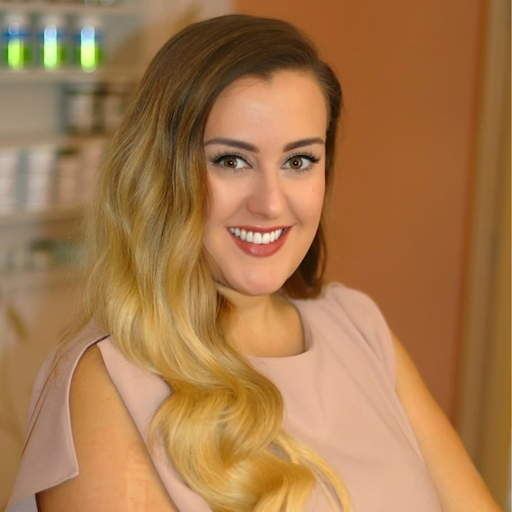
This blog was written by Lottie Hartigan.
Lottie is a Kinesiologist based in Surrey, specialising in women’s health. Systematic Kinesiology has been part of her life from the very beginning — her grandfather pioneered Systematic Kinesiology in the 1970s after training extensively in the United States, and her mother Claire Muller (TASK principal) completed her Practitioner training while pregnant with her.
Lottie formally began her own training in 2008, qualifying in 2012, and has been in clinical practice ever since. Alongside her practice, she is a tutor with The Academy of Systematic Kinesiology, supporting the training and development of future practitioners.
You can view Lottie’s website and contact her here.